Working Method
Process — how Artist G. builds mixed-media abstract paintings
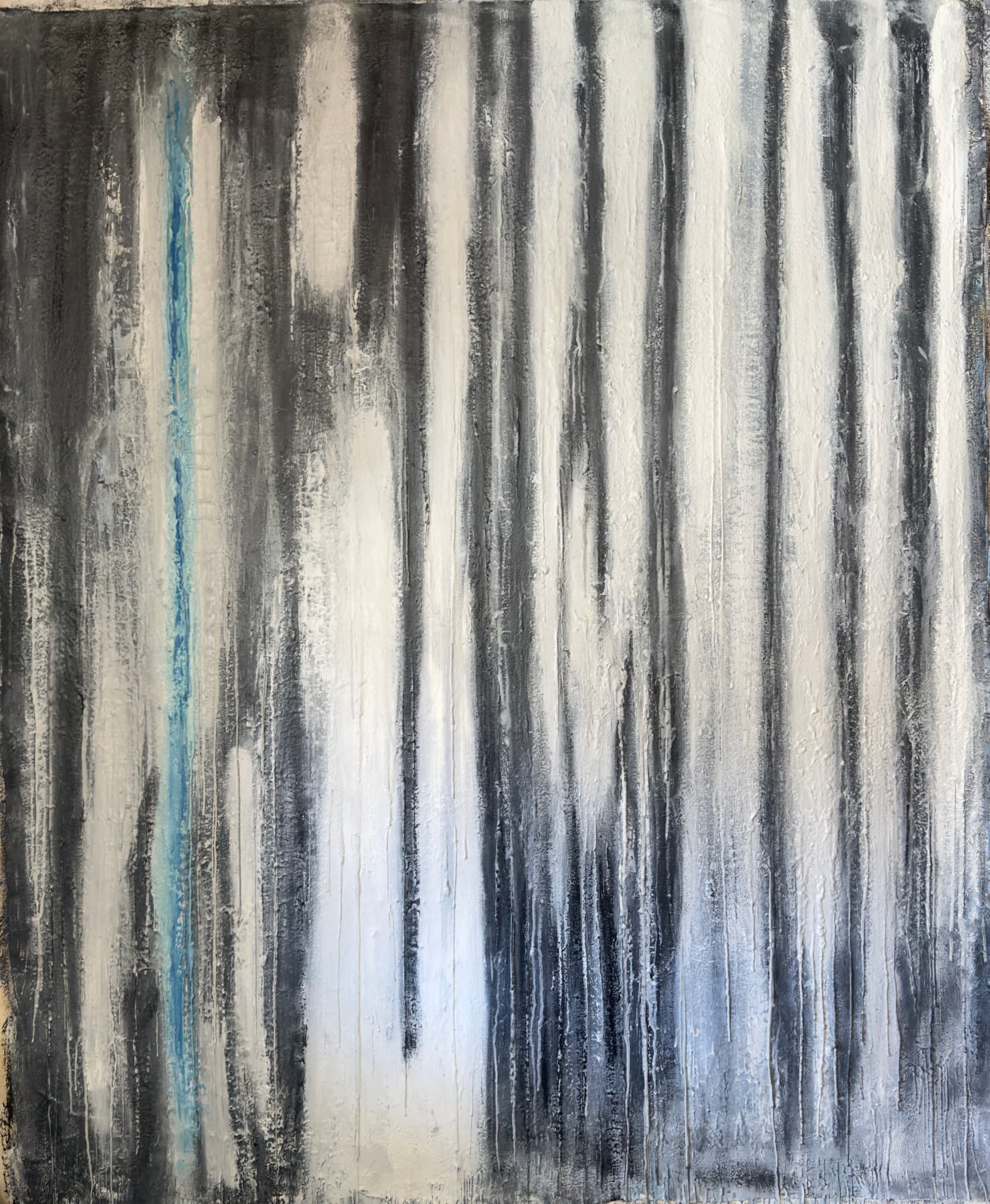
01
Intuitive Composition
The work begins without a fixed destination. Each surface is approached with a single decision, then a response, then a reversal. What appears is not planned; it is followed.
02
Layering and Excavation
Layers accumulate for weeks or months and are then removed, scraped, and cut back. The final image is what survives the process — an object closer to archaeology than to painting.
03
Collage and Found Material
Torn book pages, industrial paper, and printed matter are pressed into the surface. They arrive with their own histories; the work absorbs them without translating them.
04
Raw and Organic Materials
Ash, wax, plaster, driftwood, oxidized copper, and studio debris are bound into pigment. The surface refuses to look painted; it looks lived.
05
Monumental Scale
Scale is not decoration. A painting the size of a wall asks the body to slow down. The viewer stops looking and begins standing with the work.
06
Perception After Vision Loss
Losing sight in one eye altered depth, focus, and attention. The studio became a place to rebuild seeing — through touch, memory, and interior imagery as much as through the eye.
07
Studio Experimentation
The practice remains a laboratory. Tools include palette knives, brooms, rollers, hands, and objects that were never intended for painting. Every work leaves the studio changed by what preceded it.